
Rhode Island Current — Sewage-contaminated water made 60% of R.I. beaches unsafe for swimming in 2024
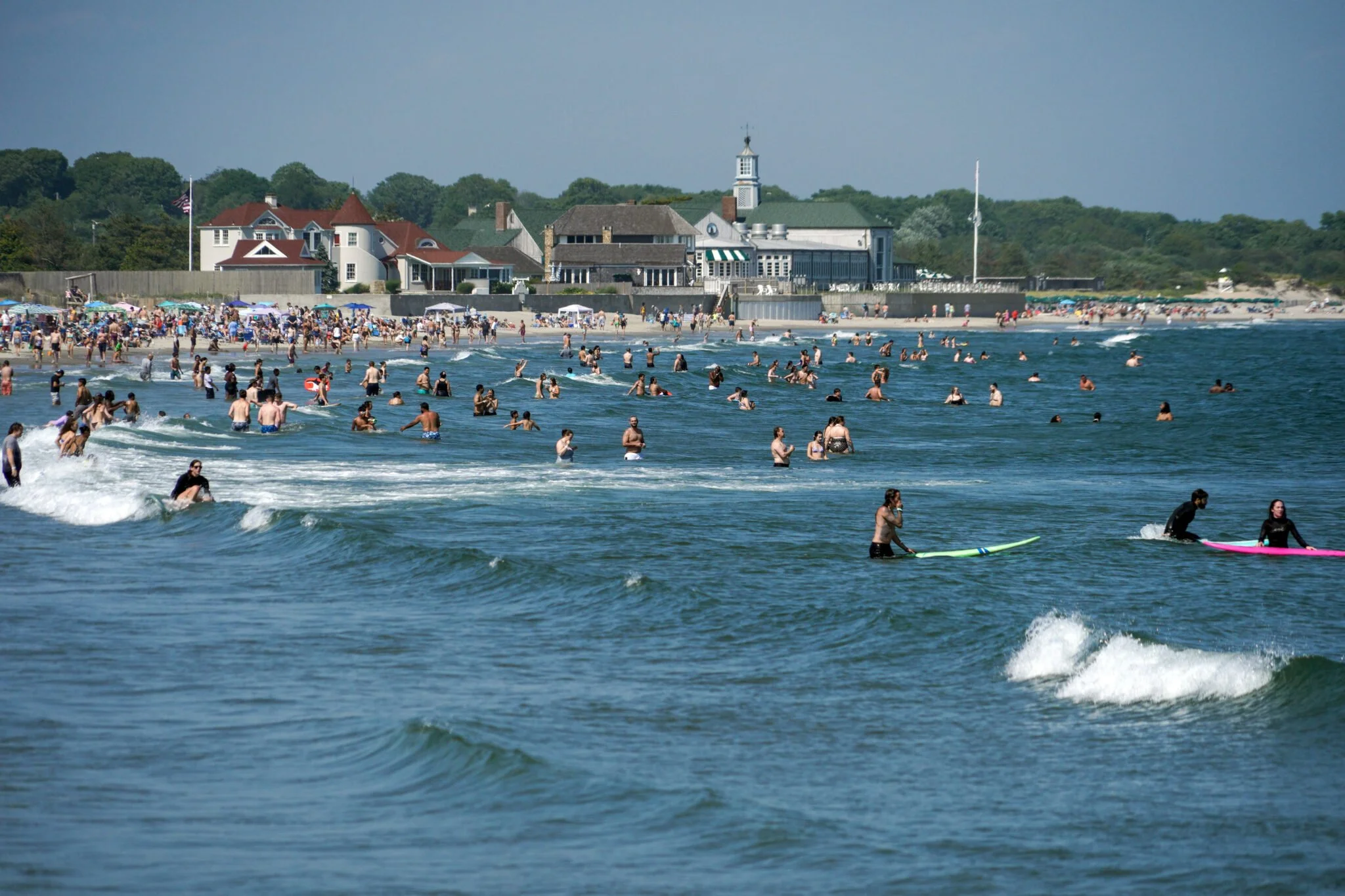
Beachgoers are shown at Narragansett Town Beach on June 22, 2025, during the recent period of very hot weather. (Photo by Laura Paton/Rhode Island Current)
July 11, 2025
By Nancy Lavin — New data highlights need for wastewater infrastructure upgrades to prevent pollution in public waterways
Steven Spielberg never made a cult-favorite thriller about the dangers of sewage-infested waters.
But the amount of fecal matter lurking in the water surpassed federal safety recommendations at least one time in 2024 at nearly six in 10 of the 66 Rhode Island beaches tested, new data shows.
Rex Wilmouth, state director for the Rhode Island chapter of Environment America, is shown at the press conference at Oakland Beach in Warwick Friday, July 11, 2025. (Contributed photo)
Even more alarming: 25 state and local beaches exceeded federal water quality safety thresholds on 25% or more of the testing days, according to a report published on July 7 by Environment America’s Research & Policy Center.
“It’s absurd in today’s society we need to be worried about crap in the water, literally,” said Rex Wilmouth, state director for the Rhode Island chapter of the nonprofit research and advocacy firm. “Even one day is one day too many.”
Wilmouth unveiled the disturbing findings at a press conference at Oakland Beach in Warwick Friday morning. The Rhode Island Department of Health closed the city-run saltwater beach on June 24 due to high bacteria counts, though it was reopened two days later. On Thursday, two other Warwick swimming areas, at City Park and Conimicut Point beaches, were closed due to high bacteria accounts detected by the Rhode Island Department of Health.
The state health department samples and tests water at state and local saltwater beaches during the summer season each year and notifies the public if unsafe bacteria levels are detected. Swimming in contaminated water can cause gastrointestinal illnesses, respiratory disease, eye and ear infections and skin rashes, with an estimated 57 million cases of illness nationwide each year. However, a majority of the illnesses go unreported.
Environment America’s report compares state and federally reported levels of fecal contamination against the U.S. Environmental Protection Agency’s health safety threshold, or Beach Action Value, to determine which beaches may pose health risks to swimmers, and how often.
Of the 3,187 beaches tested nationwide in 2024, 61% showed unsafe levels of contamination on at least one testing day. And one in seven of those tested were marked by dangerous levels of bacteria at least 25% of testing days.
…