
ecoRI News — This Retreat Isn’t a Sign of Weakness
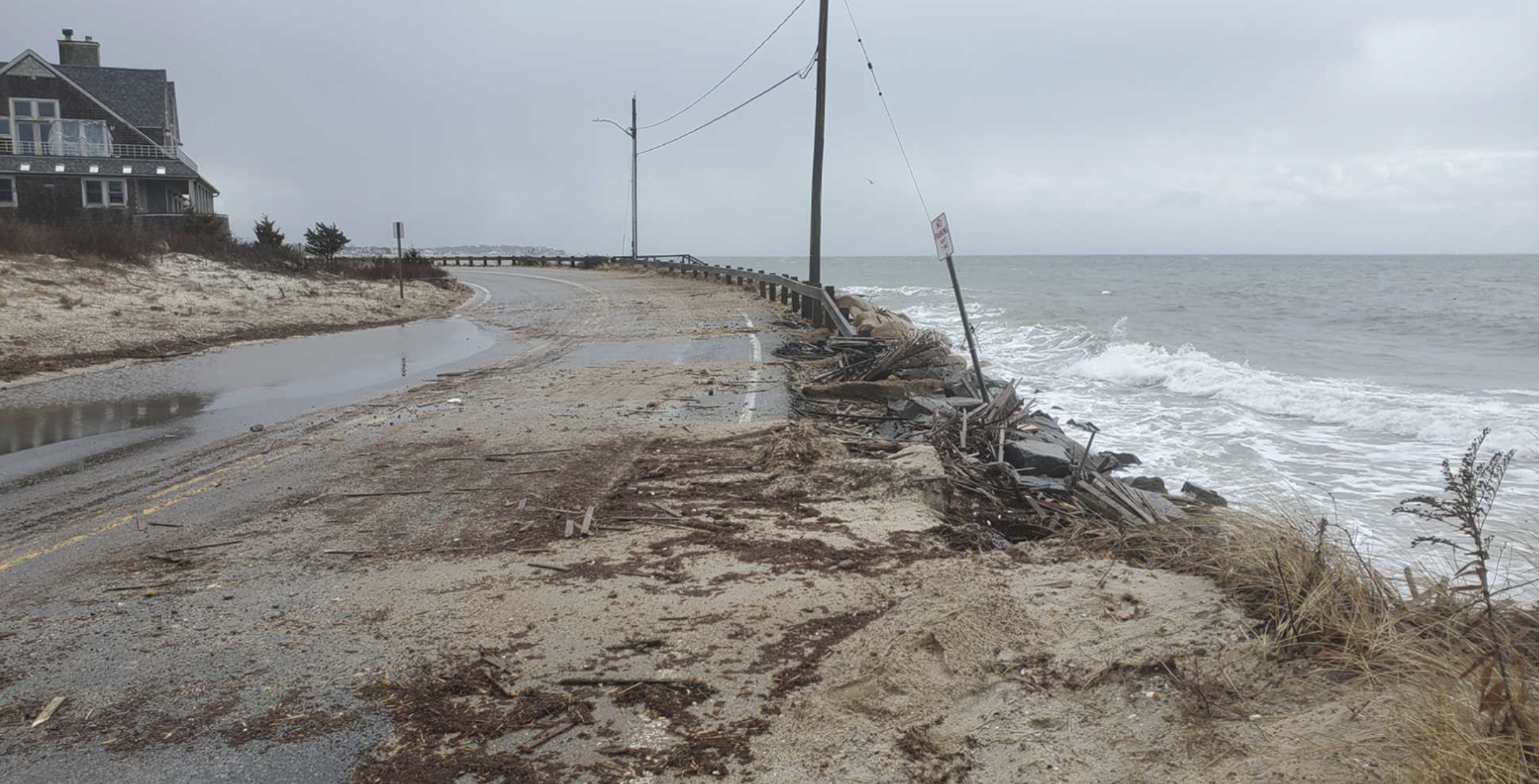
Surf Drive in Falmouth, Mass., after a storm in early January 2024. (MyCoast)
July 10, 2025
By Frank Carini — When it comes to climate change and southern New England’s eroding coastline, managed retreat is an unpopular choice. But there likely will come a time, perhaps sooner than we think, when it becomes the only option.
The climate crisis is altering human reality and the world in which we live. Many coastal policy experts in the region believe managed retreat needs to be part of this new reality.
Emma Gildesgame, climate adaptation scientist for The Nature Conservancy (TNC) in Massachusetts, believes honest conversations about managed retreat, also known as coastal relocation, are a must. She said the goal is to “work with nature to keep people safer from climate change.”
“This is the home that you bought, that you plan to live in for the rest of your life,” Gildesgame said, “but it’s going to be underwater more often than is sustainable for you to live in … that’s at the heart of the conversation.”
Managed retreat is about giving the shore room to breathe. Measures include voluntary buyouts, razing of buildings, easements, zoning changes, and moving structures.
To help raise awareness about rising coastal waters and to educate people living in places that routinely flood, TNC and Communities Responding to Extreme Weather (CREW) are hosting a series of events in Bay State coastal communities to share information about climate preparedness strategies. Their work is supported by a grant from the Massachusetts Office of Coastal Zone Management.
Gildesgame said they are specifically interested in hearing from people about their perspectives on managed retreat and other relocation strategies as tools to adapt to significant flood risk.
…